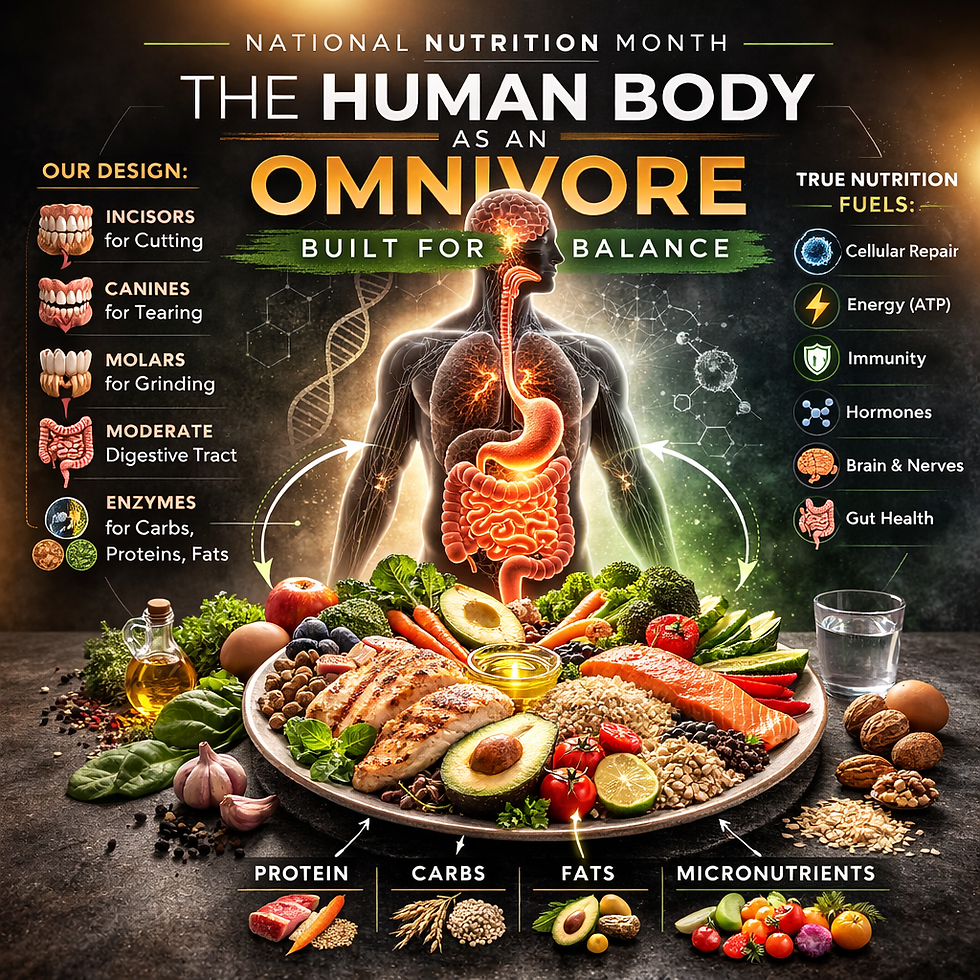
Understanding the Modern Food Guide: Nutrition, Bioavailability, Healthy Fats, and What Cravings Really Mean

Updated: Mar 12

The Evolution of the Food Pyramid - Understanding the Modern Food Guide
The Evolution of the Food Pyramid
For many years, nutrition education centered on the traditional food pyramid, which emphasized large servings of grains and carbohydrates while discouraging fats.
However, advances in nutritional science and a revamp of the Modern Food Guide revealed that this approach did not fully reflect how the body actually uses nutrients. As research connected processed foods and refined carbohydrates to rising rates of chronic illness, dietary guidelines evolved.
In 2011, the United States Department of Agriculture replaced the pyramid with MyPlate, a simplified visual guide based on modern research.
The Modern MyPlate Model
MyPlate emphasizes food balance and quality rather than quantity alone.
The Plate is Divided Into:
🥦 Half the plate — Fruits and Vegetables Provides fiber, antioxidants, vitamins, and minerals essential for disease prevention.
🌾 One quarter — Whole Grains Supports digestive health and provides sustained energy.
🍗 One quarter — Lean Proteins Necessary for muscle repair, immune defense,
and enzyme production.
🥛 Side serving — Dairy or calcium sources Supports bone strength and cellular function.
🥑 Healthy fats — Included in moderation Now recognized as essential for brain, hormone, and cellular health.

Why Modern Guidelines Changed
Earlier dietary models unintentionally promoted many foods that were:
• Highly processed
• Stripped of natural nutrients
• Artificially fortified
• High in preservatives and additives
Large-scale research has since linked diets high in ultra-processed foods to:
⚠️ Obesity
⚠️ Type 2 Diabetes
⚠️ Cardiovascular Disease
⚠️ Chronic Inflammation
⚠️ Metabolic Syndrome
Modern nutrition emphasizes whole foods because the body absorbs and uses their nutrients more effectively.

What is Bioavailability?
Bioavailability refers to how efficiently the body can absorb and use nutrients from the foods we eat.
Not everything consumed becomes usable fuel.
Example Comparison
Food | Nutrient Usefulness |
Whole orange | High vitamin C absorption |
Orange-flavored candy | Minimal usable nutrients |
Fresh spinach | Iron absorbed effectively |
Processed vegetable chips | Reduced nutrient value |
Why Bioavailability Matters
Highly processed foods often:
❌ Contain synthetic nutrients
❌ Lack natural fiber and enzymes
❌ Digest too rapidly
❌ Cause blood sugar spikes
❌ Interfere with nutrient absorption
This explains why someone can consume adequate calories yet still experience nutrient deficiencies.
For healthcare providers, this concept is essential when assessing malnutrition and recovery outcomes.
Why Are Healthy Fats Now Recognized as Essential?
For decades, fats were restricted due to concerns about heart disease. Today, medical research confirms that fats are biologically essential for survival.
The key is choosing healthy fats in appropriate amounts — not eliminating them.
🧠 Brain Structure and Function
The brain is composed of nearly 60% fat by dry weight.
Healthy fats support:
• Neuronal membrane structure
• Myelin sheath insulation of nerves
• Neurotransmitter signaling
• Mood and cognitive function
Low intake of healthy fats has been associated with:
⚠️ Brain fog
⚠️ Mood instability
⚠️ Reduced concentration
⚠️ Increased depression risk
Omega-3 fatty acids are especially important for regulating inflammation and maintaining neural health.

Fat Metabolism and ATP Energy Production
Fats provide a concentrated, efficient fuel source.
Through beta-oxidation, fatty acids are converted in the mitochondria into acetyl-CoA, which enters the citric acid cycle. This drives the electron transport chain to produce:
ATP (adenosine triphosphate) — the body’s primary energy molecule.
Fat metabolism yields more than twice the energy per gram compared to carbohydrates.
This supports:
• Long-term energy supply
• Organ function
• Cellular repair
• Endurance activity
• Survival during fasting states
Without fats, cells cannot maintain efficient energy production.
Muscle Development and Recovery
Healthy fats assist muscle health by supporting:
• Hormone production
• Cellular membrane stability
• Anti-inflammatory recovery processes
• Absorption of vitamins needed for tissue repair
Insufficient fat intake may impair:
⚠️ Muscle repair
⚠️ Strength development
⚠️ Exercise recovery
⚠️ Hormonal balance
Fat-Soluble Vitamin Absorption
Dietary fats enable absorption of essential vitamins:
Vitamin | Role |
A | Vision and immune health |
D | Bone strength and calcium regulation |
E | Antioxidant protection |
K | Blood clotting and healing |
Very low-fat diets may therefore contribute to functional deficiencies.
Choosing the Right Fats
✅ Healthy Fats
• Unsaturated fats
• Omega-3 fatty acids
• Monounsaturated fats
Sources include:
🥑 Avocados
🐟 Fatty fish
🌰 Nuts
🌱 Seeds
🫒 Olive oil
⚠️ Fats to Limit
• Artificial trans fats
• Hydrogenated oils
• Highly processed deep-fried fats
These are linked to inflammation and cardiovascular disease.

Processed Foods and Chronic Disease
Ultra-processed foods often contain additives that disrupt metabolic processes.
Common concerns include:
🧪 Artificial colorings
🧂 Sodium preservatives
🍬 Refined sugars
🧈 Hydrogenated oils
🧫 Flavor enhancers
Frequent consumption is associated with:
• Insulin resistance
• Hormonal disruption
• Gut microbiome imbalance
• Increased cardiovascular strain
What Are Cravings?
Cravings are biological signals — not simply lack of willpower.
They occur when the body detects:
⚖️ Nutrient deficiencies
⚡ Energy imbalances
🧠 Neurotransmitter fluctuations
🩸 Blood sugar instability
😴 Fatigue or stress
Hormones involved include:
• Ghrelin (hunger signaling)
• Leptin (satiety signaling)
• Dopamine (reward pathways)
Why Cravings Are Physiological Clues
Cravings may signal the need for specific nutrients, even if the brain seeks fast comfort foods instead.
Craving | Possible Body Signal |
Chocolate | Magnesium deficiency |
Salty foods | Electrolyte imbalance |
Red meat | Iron deficiency |
Sugary foods | Energy depletion |
Crunchy snacks | Stress response |
Taste preferences may favor convenience, but the body seeks nutrient restoration.
Clinical Insight for Nursing Students
Patients may:
• Overconsume calories but remain malnourished
• Misinterpret cravings as emotional hunger
• Experience fatigue due to poor nutrient absorption
Understanding bioavailability and fat metabolism allows nurses to:
✔ Provide accurate dietary education
✔ Recognize deficiency patterns
✔ Support recovery and healing
✔ Promote preventative care strategies
Key Takeaway
Modern nutrition science shows that:
🥦 Whole foods improve nutrient absorption
🧬 Bioavailable nutrients support cellular health
🥑 Healthy fats are essential for brain and energy function
⚠️ Processed foods contribute to chronic disease
🧠 Cravings are biological signals, not failures
Nutrition is not just about how much we eat —it’s about how effectively our body can use it.
Medical & Educational Disclaimer
This article is for educational purposes only and is intended for nursing students and healthcare learners. It does not replace professional medical diagnosis or treatment. Individuals experiencing symptoms should consult a qualified healthcare provider for assessment and appropriate testing.
💡 Ready to Get Certified?
Be prepared. Be confident. Learn First Aid Today & Save a Life Tomorrow with Saving Grace Medical Academy Ltd. Now enrolling: Basic Life Support (BLS) & Standard First Aid CPR-C & AED courses designed for healthcare professionals.
📍 Training for First-Year Nursing Students
Join Saving Grace Medical Academy Ltd. for fully certified, CSA-compliant Standard First Aid CPR-C & AED courses—designed for Alberta’s future healthcare professionals.
Just Remember:
Protect Yourself. Call 911.Don’t Waste Time.

RESOURCES:
Advanced Cardiovascular Life Support - Heart & Stroke Foundation
Basic Life Support BLS- CPR Course 09:00am | Saving Grace Medical
Advanced Cardiovascular Life Support Course | Saving Grace Medical
Nutrition Month 2026 – Registered Dietitians Association of Alberta
Nutrition Month 2026: Nourish to Flourish | Parkland School Division

Author - Saving Grace Medical Academy Ltd
Grace. T
Medical Content Writer