Nutrition for Healthcare Professionals: A Practical Guide for Energy, Focus & Patient Care


Nutrition for Healthcare Professionals: A recap of National Nutrition Month 2026
🥗 Why This Post Matters
As healthcare professionals and nursing students, your body is your first piece of medical equipment. Long shifts, high stress, and irregular meals can quietly lead to fatigue, brain fog, and reduced clinical performance.
This recap brings together key nutrition principles from our recent series to help you and others maintain Nutrition for Healthcare Professionals:
Maintain consistent energy levels
Improve mental clarity under pressure
Support long-term cardiovascular and metabolic health
Apply real-world nutrition strategies during shifts
This educational content was developed by experienced emergency medical instructors at Saving Grace Medical Academy to support healthcare professionals in high-performance environments.
The Hidden Impact of Nutrition on Clinical Performance
🧠 Nutrition isn’t just about weight or appearance — it directly affects:
Cognitive function
Reaction time
Decision-making under stress
Even mild dehydration or poor nutrient intake can lead to:
Slower assessment skills
Reduced concentration
Increased risk of errors
👉 This is why we emphasized in our previous post on hidden dehydration that many healthcare professionals operate in a constant low-level deficit without realizing it.

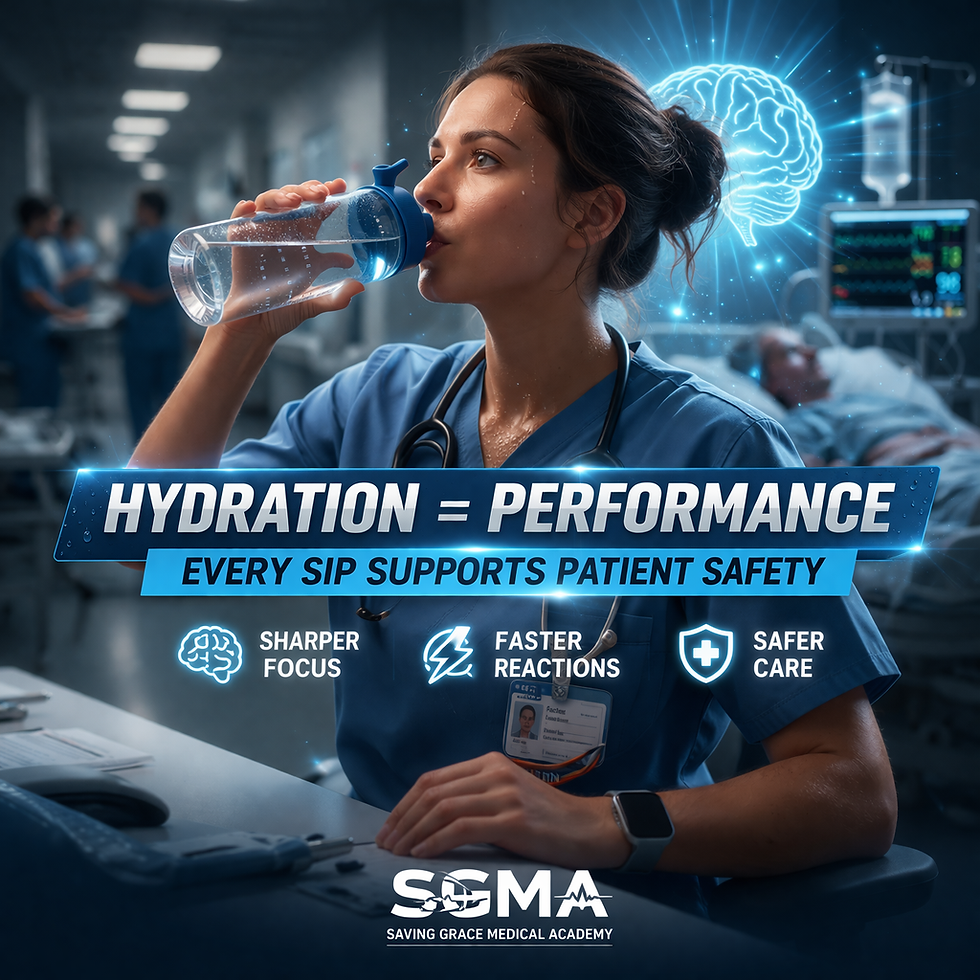
💧 Hydration: The Most Overlooked Performance Tool
Hydration plays a critical role in:
Blood pressure regulation
Oxygen delivery
Temperature control
Key takeaway: If you feel tired, foggy, or irritable during a shift — hydration is one of the first things to assess.
Quick Strategy:
Start shift hydrated
Keep a bottle visible (not in your bag)
Small, frequent sips > large infrequent intake

🥛 Dairy, Digestion & Energy Balance
Not all dairy is equal — and not all discomfort means allergy.
We explored:
Lactose intolerance vs true allergy
Why fermented dairy (like yogurt) is often easier to digest
How dairy can provide:
Protein
Calcium
Sustained energy
Clinical Insight: Understanding digestion helps you educate patients — and avoid unnecessarily restrictive diets yourself.

❤️ Cholesterol & Cardiovascular Health
Cholesterol isn’t the enemy — imbalance is.
We broke down:
HDL (“good”) vs LDL (“bad”) cholesterol
The role of fats in hormone production and brain function
How processed foods and lifestyle contribute to cardiovascular risk
Key takeaway: Healthy fats (nuts, fish, olive oil) support both heart health and brain performance — critical for healthcare workers.
🌾 Grains, Energy & Metabolism
Carbohydrates are your body’s primary fuel source — but quality matters.
We covered:
Whole grains vs refined carbs
Blood sugar spikes vs sustained energy
How poor carb choices lead to:
Energy crashes
Irritability
Reduced focus
Shift Tip: Choose slow-release carbs (oats, brown rice, quinoa) before long shifts.
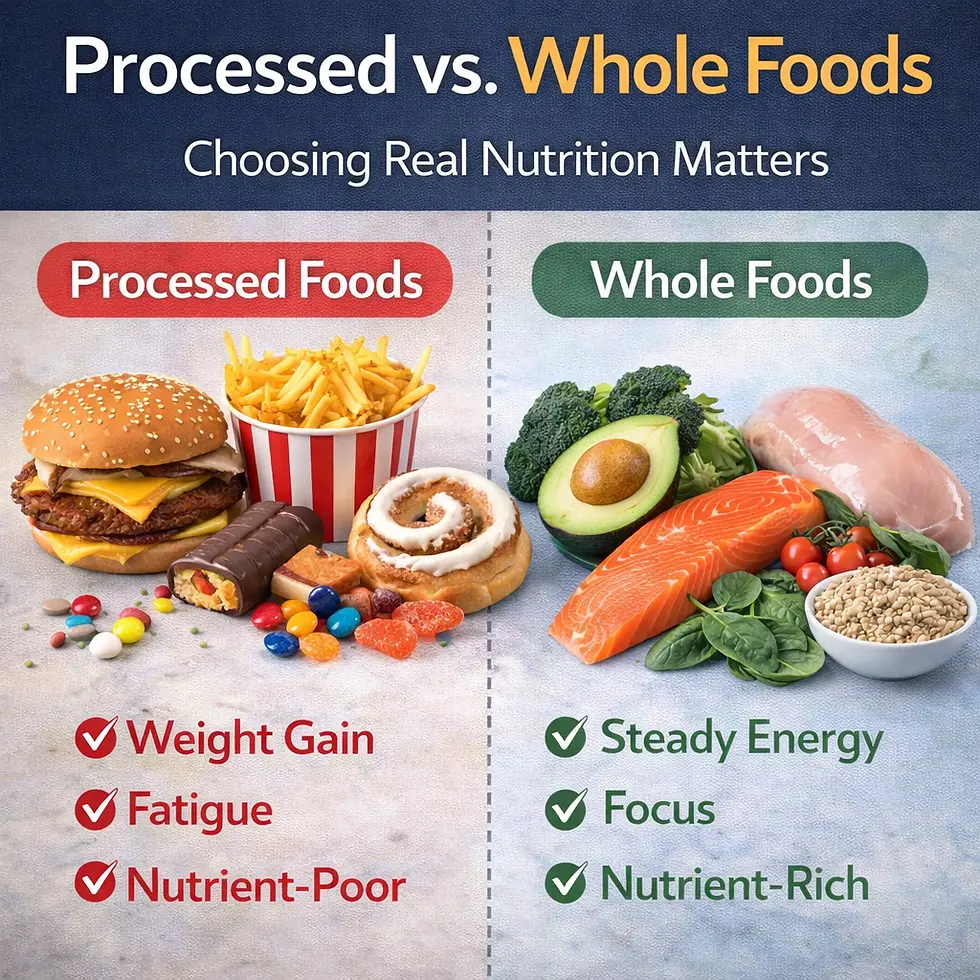
⚠️ Processed Foods & Long-Term Health Risks
Highly processed foods are convenient — but come at a cost.
Linked risks include:
Cardiovascular disease
Type 2 diabetes
Chronic inflammation
Reality Check: Healthcare professionals are especially vulnerable due to:
Time pressure
Limited break access
Convenience-based eating habits

🧩 Putting It All Together: Real-World Application
Nutrition doesn’t need to be perfect — it needs to be consistent and practical.
Simple Framework:
💧 Hydrate first
🍎 Choose whole foods when possible
🥜 Include protein + healthy fats
🌾 Prioritize slow-release carbs
⏱ Prep ahead when you can
🩺 Case Scenario
A nursing student working a 12-hour clinical shift reports:
Fatigue by mid-shift
Difficulty concentrating
Headache and irritability
They skipped breakfast and relied on coffee and a packaged snack.
Question: What is the most likely contributing factor?
A) Lack of caffeine
B) Dehydration and poor nutrient intake
C) Acute illness
D) Sleep disorder
Answer:
B) Dehydration and poor nutrient intake
Rationale: Without proper hydration and balanced nutrition, the body lacks the fuel needed for cognitive and physical performance, leading to fatigue, headaches, and reduced focus.
🏥 Why This Matters in Healthcare
As a healthcare provider, your performance affects:
Patient safety
Clinical decision-making
Team efficiency
Taking care of your nutrition isn’t just personal — it’s professional responsibility.
🏡 Home Treatment and Self-Care
Carry a reusable water bottle daily
Pack quick, balanced snacks (nuts, yogurt, fruit)
Avoid relying solely on caffeine for energy
Eat small, frequent meals during long shifts
Monitor how different foods affect your energy levels
Medical & Educational Disclaimer
This article is for educational purposes only and is intended for nursing students and healthcare learners. It does not replace professional medical diagnosis or treatment. Individuals experiencing symptoms should consult a qualified healthcare provider for assessment and appropriate testing.
💡 Ready to Get Certified?
Be prepared. Be confident. Learn First Aid Today & Save a Life Tomorrow with Saving Grace Medical Academy Ltd. Now enrolling: Basic Life Support (BLS) & Standard First Aid CPR-C & AED courses designed for healthcare professionals.
📍 Training for First-Year Nursing Students
Join Saving Grace Medical Academy Ltd. for fully certified, CSA-compliant Standard First Aid CPR-C & AED courses—designed for Alberta’s future healthcare professionals.
Just Remember:
Protect Yourself. Call 911.Don’t Waste Time.

RESOURCES:
Advanced Cardiovascular Life Support - Heart & Stroke Foundation
Basic Life Support BLS- CPR Course 09:00am | Saving Grace Medical
Advanced Cardiovascular Life Support Course | Saving Grace Medical
Nutrition Month 2026 – Registered Dietitians Association of Alberta
Nutrition Month 2026: Nourish to Flourish | Parkland School Division

Author - Saving Grace Medical Academy Ltd
Grace. T
Medical Content Writer