


What is Hand, Foot & Mouth Disease?
- Jason T

- Dec 6, 2025
- 5 min read
Updated: Apr 24
Hand, Foot & Mouth Disease: What You Need to Know
Hand, Foot & Mouth Disease (HFMD) is a common viral illness that primarily affects young children. Most cases are mild, but discomfort can be significant—especially when painful mouth sores impact hydration. Good hygiene is the most effective way to prevent spread.
This illness is not related to Foot and Mouth Disease in animals.
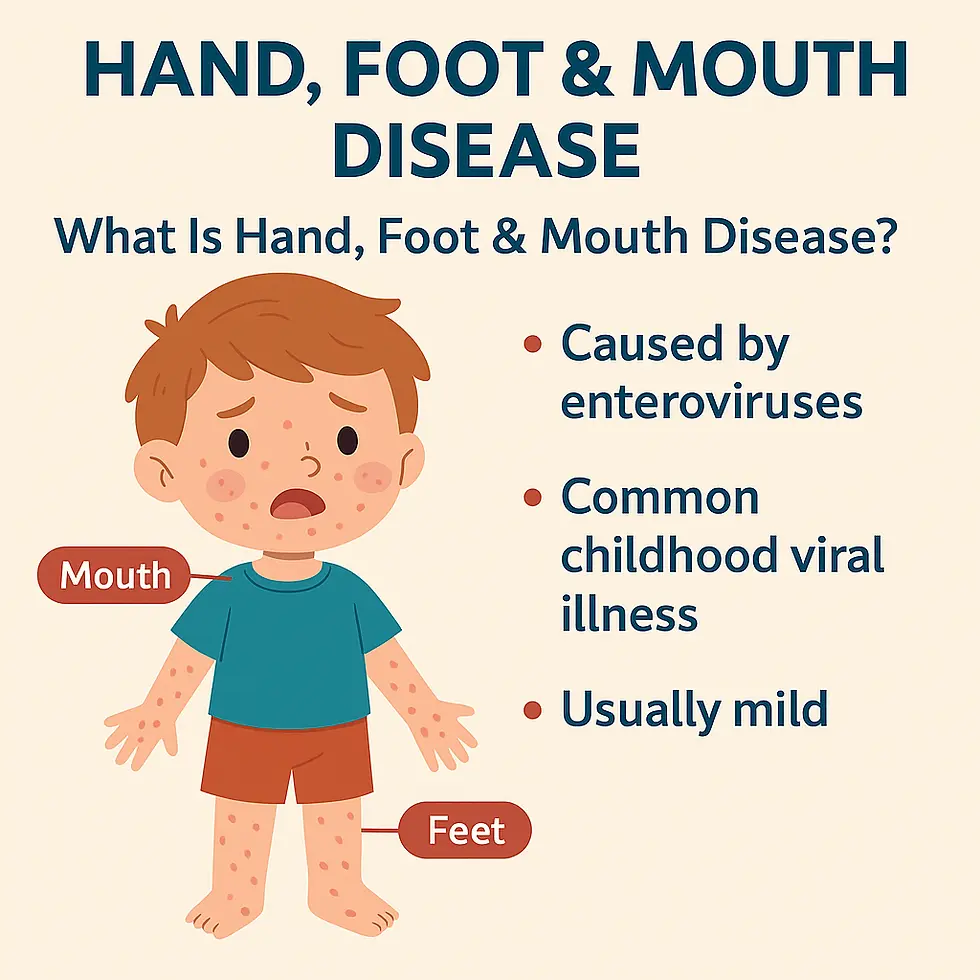
What Is Hand, Foot & Mouth Disease?
Hand, Foot & Mouth Disease is caused by enteroviruses, most commonly Coxsackievirus A16 and Enterovirus 71. It is most frequently seen in children under 10 but can occur at any age, including adults and pregnant individuals.
Most infections resolve within 7–10 days without complications. Rarely, enteroviruses can lead to more serious conditions such as viral meningitis, encephalitis, or myocarditis.

Signs & Symptoms
HFMD typically begins with mild, cold-like symptoms followed by the appearance of blisters.
Common symptoms
Low-grade fever
Sore throat
Reduced appetite
Fussiness or fatigue
Small red spots that become painful blisters on:
Hands
Feet
Inside the mouth (cheeks, gums, tongue)
Occasionally on the buttocks or groin (especially in infants)
Mouth sores may make swallowing painful, increasing risk of dehydration.
How long does it last?
Most symptoms: 7–10 days
Rash/blisters: may last slightly longer
Virus shedding in stool: up to 4–8 weeks (longer in some cases)
How Is HFMD Spread?
HFMD spreads very easily, especially in group settings like daycares and preschools.
Major transmission routes
Direct contact with nasal or throat secretions
Droplets from coughing or sneezing
Fluid from blisters
Fecal-oral transmission, especially during diaper changes
Contaminated surfaces, toys, linens, and hands
Incubation period
3–5 days between exposure and first symptoms.
Who Is at Risk?
Children under 10 (highest risk)
Siblings or close contacts of infected children
Childcare workers and parents
Adults can be infected even without symptoms
Pregnancy considerations
There is no strong evidence HFMD harms unborn babies. However, infected mothers can transmit the virus to newborns, who may experience a more severe illness.
Childcare outbreaks
HFMD is not a mandatory reportable disease in Alberta, but childcare facilities must inform parents when cases occur to prevent further spread.

Prevention: How to Stop HFMD From Spreading
1. Handwashing
The most effective prevention method.
After using the toilet
After changing diapers
After wiping noses
Before preparing or eating food
After touching blisters or contaminated surfaces
Use soap and water—hand sanitizer is less effective against some enteroviruses but still helpful when soap is unavailable.
2. Avoid sharing items
Cups, utensils, toothbrushes
Towels, face cloths, personal hygiene items
Shoes/socks during outbreaks
3. Clean and disinfect surfaces
Enteroviruses are easily inactivated by:
Soap and water
Household disinfectants
Diluted bleach solution (1:10 or 1:20 ratios recommended by CDC/AHS)
4. Teach cough/sneeze etiquette
Sneeze or cough into elbow
Dispose of tissues immediately and wash hands
5. Exclude from childcare/school when appropriate
More details in a later section.
Diagnosis
HFMD is typically diagnosed clinically based on symptoms. Lab tests are rarely needed unless:
The illness is severe
Symptoms don’t match the typical pattern
There are concerns for complications

Treatment
HFMD has no specific antiviral treatment. Care focuses on comfort, hydration, and preventing secondary infections.
Symptom management
Children’s acetaminophen or ibuprofen for fever/discomfort
Never give aspirin to children
Cold fluids or soft foods to reduce mouth pain
Hydration monitoring is critical for young children
Wound/skin care
Allow blisters to dry naturally
Do not pop blisters — the fluid is infectious
Clean affected skin daily with soap and water
Use a thin layer of topical antibiotic ointment during the day only if blisters have cracked
Avoid bandages unless instructed otherwise; keep areas open to air
Dehydration watch
If a child refuses fluids due to mouth pain, they may need medical evaluation.
🚨Red Flags: When Is Hand, Foot & Mouth Serious?
Seek urgent medical attention if a child has:
Fever ≥38°C lasting more than 72 hours
Signs of dehydration (dry mouth, no tears, reduced urination)
Rapid breathing or breathing difficulty
Excessive sleepiness or irritability
Abnormal or jerking movements
Severe headache, neck stiffness, or confusion
Difficulty walking or unusual limb weakness
These may indicate complications like viral meningitis, encephalitis, or myocarditis.

When Can Children Return to Childcare or School?
Children may return when:
✔ Blisters are dry
✔ Fever is gone for 24 hours without medication
✔ They feel well enough to participate in routine activities
Note: Even after returning, the virus may still be shed in stool for weeks. Good hygiene remains essential.
HFMD typically resolves in 5–10 days, though the rash may persist slightly longer.
Public Health Guidance
HFMD is not a provincially reportable disease under Alberta’s Public Health Act. However, childcare settings should:
Notify parents when cases occur
Remind families to watch for symptoms
Reinforce handwashing and surface disinfection
Encourage parents to keep symptomatic children home
For health advice anytime, parents can call Health Link at 811.
🏠 Home Treatment and Self-Care
Encourage frequent fluid intake to prevent dehydration
Offer soft, cool foods to reduce mouth pain
Use age-appropriate fever reducers (acetaminophen/ibuprofen)
Keep blisters clean and dry
Allow rest and avoid irritation of affected areas
💡 Nursing Insight: Hydration is the priority—monitor urine output and signs of dehydration closely.

🧪 Case Scenario: Recognizing HFMD
A 3-year-old child presents with low-grade fever, decreased appetite, and small blisters on the hands and inside the mouth.
Question: What is the most likely condition?
Answer: Hand, Foot & Mouth Disease
Rationale: The combination of fever, oral sores, and hand/foot rash is characteristic of HFMD.
📚 Continuing Education for Nursing Students
Looking to expand your knowledge in infection control and patient care? Explore these related guides:
Wound Care: Home vs Clinical Management (infection prevention and skin care)
Emergency Readiness and Survival for Nursing Students (preparedness in outbreaks and emergencies)
Recognizing and Responding to Allergic Reactions (differentiating rashes and acute conditions)
Basic Infection Prevention and Hand Hygiene Practices (hand washing is an essential skill)
⚠️ Medical & Educational Disclaimer
This educational content was developed by experienced emergency medical instructors at Saving Grace Medical Academy for nursing and healthcare education. This material is for informational purposes only and does not replace professional medical advice, diagnosis, or emergency response training. Always follow local public health guidelines and emergency protocols.
💡 Ready to Get Certified?
Be prepared. Be confident. Learn First Aid Today & Save a Life Tomorrow with Saving Grace Medical Academy Ltd. Now enrolling: Basic Life Support (BLS) & Standard First Aid CPR-C & AED courses designed for healthcare professionals.
📍 Training for First-Year Nursing Students
Join Saving Grace Medical Academy Ltd. for fully certified, CSA-compliant Standard First Aid CPR-C & AED courses—designed for Alberta’s future healthcare professionals.
Just Remember:
Protect Yourself. Call 911.Don’t Waste Time.

RESOURCES:

Author - Saving Grace Medical Academy Ltd
Jason T
Retired EMT - Heart & Stroke Foundation Senior Instructor


