


Ticks in North America: Identification, Removal & First Aid
- Grace. T

- 2 days ago
- 8 min read

Ticks in North America: Identification, Removal, Lyme Disease & First Aid
A Medical Guide for Nursing Students, Outdoor Workers, and Families
Whether you are hiking through the forests of Alberta, walking your dog in tall grass, or working outdoors during the warmer months, ticks in North America are becoming an increasingly important health concern across all of North America. In recent years, public awareness surrounding tick bites and Lyme disease has grown significantly, and for good reason. Some tick species are capable of transmitting serious zoonotic diseases that can affect humans and animals alike.
Ticks are more than just annoying little parasites. They are specialized arachnids that survive by feeding on the blood of mammals, birds, reptiles, and even amphibians. While many tick bites are harmless, others may lead to bacterial, viral, or parasitic infections that can become serious if left untreated.
For nursing students and healthcare providers, understanding ticks is important not only for outdoor safety, but also for recognizing the early signs of tick-borne illness, providing patient education, and knowing when medical referral is necessary.
⚠️Medical & Educational Disclaimer
This educational content was developed by experienced emergency medical instructors at Saving Grace Medical Academy for healthcare education purposes. This article is not a substitute for professional medical diagnosis, treatment, or emergency care. If symptoms worsen, severe reactions occur, or you suspect a tick-borne illness, seek medical attention immediately.
What Are Ticks?
Ticks are small parasitic arachnids related to spiders, mites, and scorpions. Unlike insects, ticks have eight legs during their adult stage and survive by attaching themselves to a host and feeding on blood.
Ticks are considered ectoparasites because they live on the outside of their host. They use specialized mouthparts to pierce the skin and remain attached while feeding. Some species feed for only a few hours, while others may remain attached for several days.
Why Are Ticks Important Medically?
Ticks can act as vectors, meaning they can carry and transmit infectious organisms between animals and humans. These are known as zoonotic diseases because they originate in animals and can spread to humans.
Some tick-borne diseases include:
Not every tick carries disease, and not every bite results in infection. However, proper recognition and removal are extremely important.

The Tick Life Cycle
Ticks go through four life stages:
1. Egg
Female ticks lay thousands of eggs in sheltered outdoor environments such as leaf litter or tall grass.
2. Larva
Larvae hatch with six legs and often feed on small animals like mice or birds.
3. Nymph
Nymphs develop eight legs and are extremely small, making them difficult to spot. Many human infections occur during this stage because they are easy to miss.
4. Adult
Adult ticks feed on larger mammals including deer, dogs, livestock, and humans.
A complete life cycle can take anywhere from months to several years depending on species, climate, humidity, and access to hosts.
Where Do Ticks Live?
Ticks thrive in environments that are:
Humid
Shaded
Overgrown
Rich in vegetation
Common habitats include:
Tall grass
Forests
Bushes
Leaf litter
Hiking trails
Wood piles
Rural properties
Areas with deer or rodents
Ticks do not jump or fly. Instead, they use a behavior called “questing,” where they climb onto vegetation and wait with their front legs extended until a host brushes past.

Common Tick Species in North America
Blacklegged Tick (Deer Tick)
Ixodes scapularis
Lyme Disease
Anaplasmosis
Babesiosis
Common Regions:
Eastern Canada
Ontario
Quebec
Manitoba
Northeastern United States
Western Blacklegged Tick
Ixodes pacificus
Lyme Disease
Anaplasmosis
Common Regions:
British Columbia
Western United States
American Dog Tick
Dermacentor variabilis
Rocky Mountain Spotted Fever
Tularemia
Common Regions:
Across much of Canada and the United States
Lone Star Tick
Amblyomma americanum
Ehrlichiosis
Alpha-gal Syndrome
Common Regions:
Southern and Eastern United States
Expanding northward due to climate changes
Brown Dog Tick
Rhipicephalus sanguineus
Spreading disease primarily among dogs
Occasionally associated with Rocky Mountain Spotted Fever
Common Regions:
Worldwide
Indoor kennels and homes
How Ticks Feed
Ticks locate a host using:
Body heat
Carbon dioxide
Movement
Body odor
Once attached:
The tick cuts into the skin.
It inserts feeding structures called a hypostome.
Saliva containing anticoagulants and numbing compounds is released.
The tick slowly feeds on blood.
This is one reason many people never feel the bite.
Depending on the species and life stage, feeding may continue for several days.
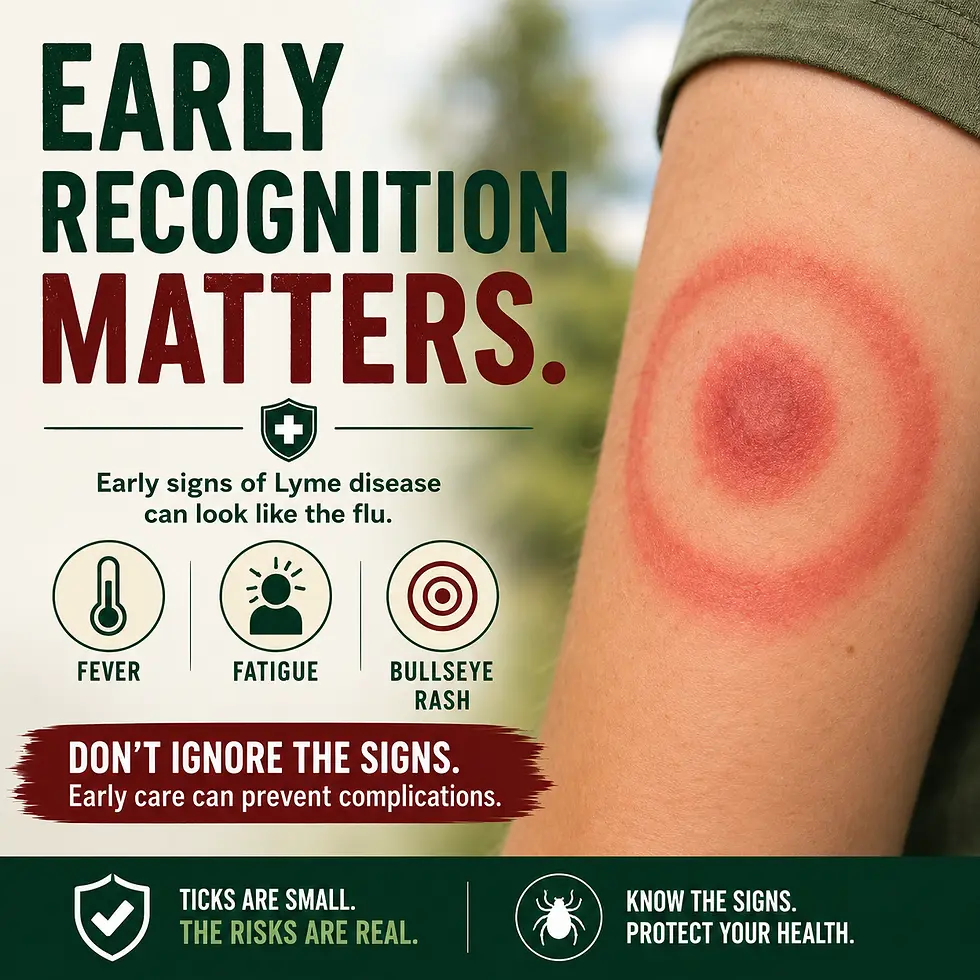
Signs and Symptoms of a Tick Bite
Many tick bites cause minimal symptoms initially.
Common local reactions include:
Redness
Mild swelling
Itching
Small bump at the bite site
However, warning signs may develop later.
Watch For:
Signs of infection include:
❌Expanding rash
❌Fever
❌Chills
❌Fatigue
❌Headache
❌Muscle aches
❌Joint pain
❌Swollen lymph nodes
Lyme Disease
Lyme disease is one of the most recognized tick-borne illnesses in North America. It is caused by the bacterium Borrelia burgdorferi and is transmitted primarily by blacklegged ticks.
Early Symptoms May Include:
A spreading red rash (“bullseye” appearance in some cases)
Fever
Fatigue
Headache
Muscle and joint pain
Later Symptoms May Include:
Arthritis
Neurological symptoms
Facial paralysis
Memory difficulties
Heart rhythm abnormalities
Early treatment with antibiotics is often highly effective.
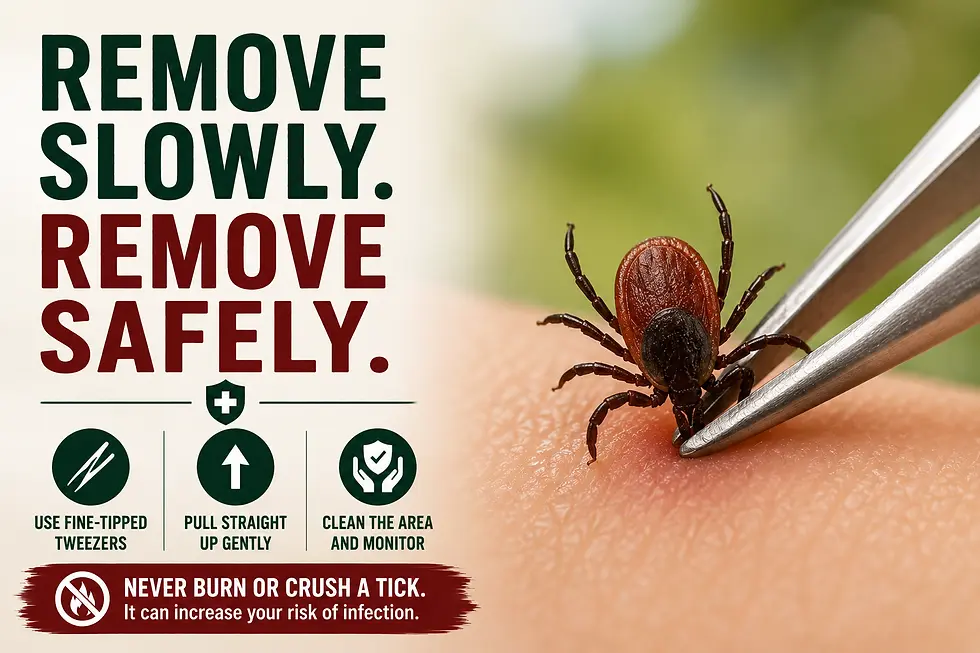
How to Remove a Tick Properly
Proper removal is extremely important because squeezing or damaging the tick may increase the risk of disease transmission.
Step-by-Step Tick Removal
1. Stay Calm
Most tick bites do not automatically mean infection.
2. Use Fine-Tipped Tweezers
Avoid using fingers if possible.
3. Grasp the Tick Close to the Skin
Grip near the head or mouthparts.
4. Pull Upward Slowly and Steadily
Do not twist, jerk, burn, or crush the tick.
5. Clean the Area
Wash with:
Soap and water
Alcohol wipe
Antiseptic solution
6. Dispose of the Tick Safely
"Keep the specimen if possible for identification of type and or disease"
Options include:
Sealed container
Tape
Flushing it away
Some people choose to save the tick for identification if symptoms develop later.
What NOT to Do
Avoid outdated home remedies such as:
❌Burning the tick
❌Applying petroleum jelly
❌Nail polish
❌Essential oils
❌Suffocating the tick
These methods may stress the tick and increase saliva release into the wound.
When to Seek Medical Attention
Seek medical care if 🚨:
The tick was attached for a prolonged period
You develop fever or rash
You experience flu-like symptoms
Parts of the tick remains embedded
The bite becomes infected
Neurological symptoms develop
You have a weakened immune system

Tick Prevention Tips
Prevention is the best defense against tick-borne illness.
Protective Measures
Clothing
Wear long sleeves
Tuck pants into socks
Wear light-colored clothing to spot ticks easier
Repellents
Use approved insect repellents containing:
DEET
Icaridin/Picaridin
After Outdoor Activity
Shower promptly
Perform full-body tick checks
Check pets carefully
Wash clothing in hot water
Ticks commonly hide:
Behind knees
Groin
Armpits
Scalp
Waistbands
Behind ears
Ticks and Habitat Change
Healthcare professionals across Canada are observing changes in tick populations due to:
Warmer winters
Expanding wildlife ranges
Increased humidity
Changing ecosystems
Encroaching Human Habitation on natural habitat
Reduced natural food source of the tick
Tick habitats are expanding farther north into Canada, increasing the importance of public awareness and prevention education.
Home Treatment and Self-Care
Most uncomplicated tick bites can be managed at home after proper removal.
Basic Self-Care Includes:
Washing the bite site daily
Monitoring for rash or flu-like symptoms
Avoiding scratching
Using antihistamines for itching if appropriate
Applying topical antiseptics
A small amount of redness immediately after removal is common and does not automatically indicate Lyme disease.
If symptoms worsen or new symptoms appear days to weeks later, seek medical attention promptly.

Why This Matters for Nursing Students
Nursing students and healthcare providers may encounter patients with vague symptoms such as:
Fatigue
Fever
Joint pain
Rash
Neurological changes
A thorough patient history including outdoor exposure and recent travel can help identify possible tick-borne illness early.
Understanding proper tick removal and prevention also allows healthcare providers to educate patients effectively and reduce complications.
📚 Continuing Education for Nursing Students
Interested in learning more about outdoor medical emergencies, infection prevention, and environmental first aid? Continue exploring:
Infections and Disease Prevention – Understanding how bacteria, viruses, and parasites spread and how healthcare providers reduce infection risks
Insect Stings and Bites – Learning how to identify and treat bites, stings, allergic reactions, and venomous encounters safely
Bone, Muscle, and Joint Injuries – Exploring sprains, strains, fractures, and wilderness injury management during outdoor activities
Environmental Emergencies and First Aid – Recognizing heat illness, hypothermia, dehydration, and survival priorities in remote environments
How to Properly Clean and Disinfect a Wound – Learning modern wound care principles to reduce infection and improve healing outcomes
Allergic Reactions and Anaphylaxis – Understanding immune responses, emergency treatment, and when epinephrine may be required
Conclusion
Ticks may be small, but the diseases they carry can have major health consequences if ignored. Fortunately, education, prevention, early recognition, and proper removal significantly reduce the risk of serious complications.
Whether you are a nursing student, healthcare professional, camper, hunter, hiker, or parent, understanding tick safety is becoming increasingly important across North America.
The good news? Most tick bites can be managed safely with calm assessment, proper removal techniques, and careful monitoring afterward.
💡 Ready to Get Certified?
Be prepared. Be confident. Learn First Aid Today & Save a Life Tomorrow with Saving Grace Medical Academy Ltd. Now enrolling: Basic Life Support (BLS) & Standard First Aid CPR-C & AED courses designed for healthcare professionals.
📍 Training for First-Year Nursing Students
Join Saving Grace Medical Academy Ltd. for fully certified, CSA-compliant Standard First Aid CPR-C & AED courses—designed for Alberta’s future healthcare professionals.
Just Remember:
Protect Yourself. Call 911.Don’t Waste Time.

RESOURCES:

Author - Saving Grace Medical Academy Ltd
Grace. T
Medical Content Writer


