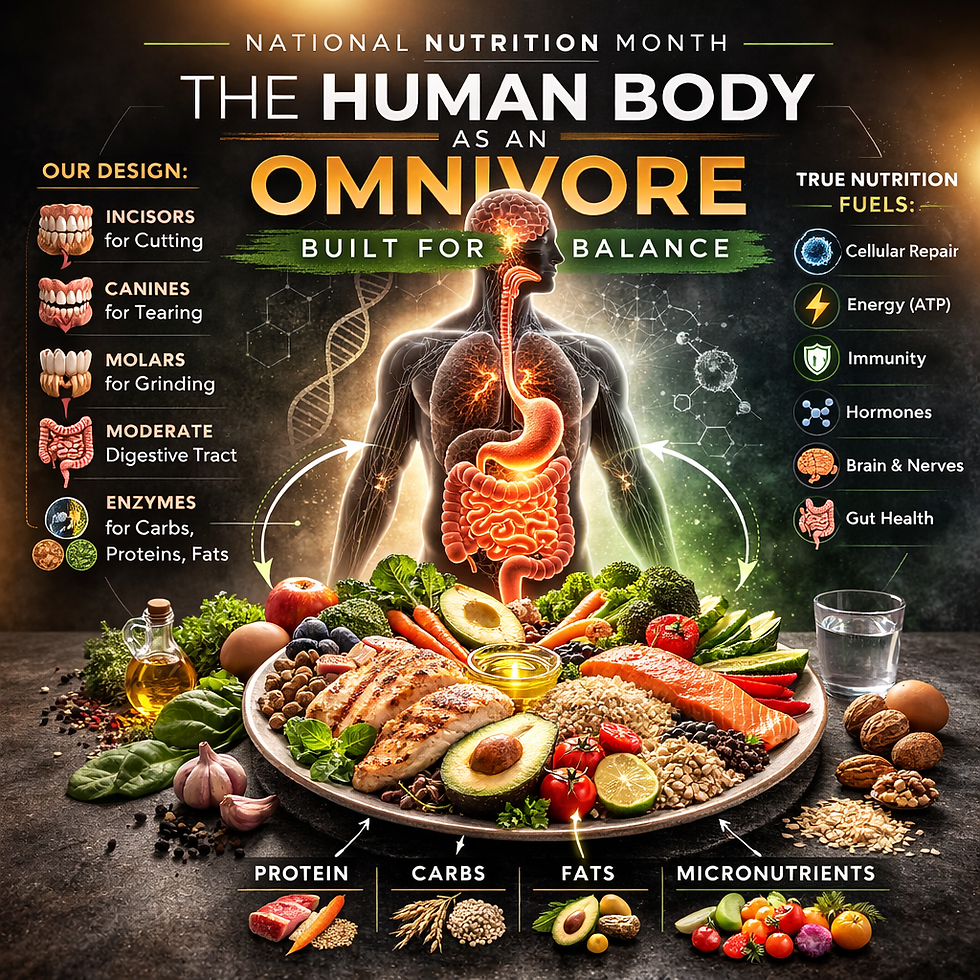
Nutrition Month: The Human Engine — IDLH Levels of Essential Vitamins and Minerals
- Grace. T

- Mar 5
- 6 min read

National Nutrition Month: Key stats for Essential Vitamins and Minerals
(A Mechanic’s Guide for Nursing Students)
The human body operates much like a finely tuned machine. Mechanics analyze engine oil to detect wear metals, contamination, and system failure before catastrophic damage occurs.
Healthcare professionals do the same thing using blood tests, electrolyte panels, and metabolic markers.
Instead of pistons and crankshafts, the human “engine” relies on vitamins and minerals to maintain function.
If levels fall too low—or rise too high—the system enters a danger zone similar to an IDLH condition, where organ damage or death may occur. What is IDLH? Its the "Immediately Dangerous to Life & Health (IDLH)" range, often used by paramedics to prevent our patients from going to far in either direction which could leave our patient into a potentially life threatening emergency.
Understanding these levels helps healthcare providers identify nutritional deficiencies, metabolic disorders, and toxic exposures early.

The Body’s Core System Fluids: Key Vitamins and Minerals
Below are some of the most critical nutrients required for human survival and their approximate physiological ranges.
(Values may vary slightly between laboratories.)
Quick Reference Chart: Essential Vitamins & Minerals Ranges
Vitamin / Mineral | Low Range (Deficiency Risk) | Normal Physiological Range | High Range (Toxicity Risk) |
Sodium (Na⁺) | <135 mmol/L (Severe risk <120) | 135–145 mmol/L | >145 mmol/L (Critical >160) |
Potassium (K⁺) | <3.5 mmol/L (Critical <2.5) | 3.5–5.0 mmol/L | >5.0 mmol/L (Critical >6.5) |
Calcium (Ca²⁺) | <2.1 mmol/L (Critical <1.9) | 2.1–2.6 mmol/L | >2.6 mmol/L (Critical >3.5) |
Magnesium (Mg²⁺) | <0.75 mmol/L (Critical <0.4) | 0.75–0.95 mmol/L | >0.95 mmol/L (Critical >2.0) |
Iron (Serum) | <10 µmol/L | 10–30 µmol/L | >30 µmol/L |
Vitamin D (25-OH) | <30 nmol/L | 75–125 nmol/L | >250 nmol/L |
Vitamin B12 | <200 pg/mL (Severe <150) | 200–900 pg/mL | >900 pg/mL |
Folate (Vitamin B9) | <4 ng/mL | 4–20 ng/mL | >20 ng/mL |
Zinc | <60 µg/dL | 60–120 µg/dL | >150 µg/dL |
Phosphorus | <0.8 mmol/L | 0.8–1.5 mmol/L | >1.5 mmol/L |
Chloride | <98 mmol/L | 98–106 mmol/L | >106 mmol/L |
How to Read This Chart (Mechanic Analogy)
Think of these ranges like engine tolerances.
Low Range: The system lacks a critical component — similar to low oil pressure or coolant loss.
Normal Range: The engine runs efficiently with proper lubrication, temperature control, and fuel balance.
High Range: The system is overloaded — similar to overheating, contaminated oil, or excess pressure in the system.
Just like mechanics detect problems early with fluid analysis, healthcare professionals use blood tests to identify metabolic imbalance before organ damage occurs.

Bioavailable Nutrients by Food Group
A Quick Reference Chart for Nursing Students
Food Group | Key Vitamins & Minerals | Why They Matter | Bioavailability Notes |
Animal Proteins (Meat, Fish, Eggs) | Iron (heme), Vitamin B12, Zinc, Selenium, Phosphorus, Protein (amino acids) | Oxygen transport, neurological function, immune health, tissue repair | Heme iron from meat is 2–3× more absorbable than plant iron |
Dairy & Calcium Sources (Milk, Cheese, Yogurt) | Calcium, Vitamin D (fortified), Phosphorus, Potassium, Vitamin B12 | Bone health, nerve transmission, muscle contraction | Lactose improves calcium absorption |
Leafy Greens & Vegetables | Magnesium, Folate (B9), Vitamin K, Potassium, Vitamin C | Blood clotting, cellular repair, electrolyte balance | Some minerals bound by oxalates (spinach) reducing absorption |
Fruits | Vitamin C, Potassium, Folate, Antioxidants | Immune health, collagen production, electrolyte balance | Vitamin C improves iron absorption from plant foods |
Whole Grains & Legumes | Magnesium, Iron (non-heme), Zinc, B Vitamins (B1, B3, B6) | Energy metabolism, nerve function | Phytates can reduce absorption unless soaked, fermented, or sprouted |
Nuts & Seeds | Magnesium, Zinc, Selenium, Vitamin E, Healthy fats | Antioxidant protection, metabolic health | Healthy fats improve absorption of fat-soluble vitamins |
Seafood | Iodine, Selenium, Vitamin D, Omega-3 fatty acids | Thyroid function, brain health, anti-inflammatory effects | Highly bioavailable minerals due to marine origin |
Simplified Visual Concept for Students
Think of food groups like maintenance fluids for the human engine:
System | Food Source | Nutrients |
Oxygen Delivery | Meat, fish | Iron, B12 |
Electrical System | Fruits, vegetables | Potassium, Magnesium |
Structural System | Dairy | Calcium, Phosphorus |
Metabolic Engine | Whole grains | B vitamins |
Protective System | Nuts, seeds | Vitamin E, Selenium |
Hormonal Regulation | Seafood | Iodine, Omega-3 |
Key Bioavailability Principles
1️⃣ Pair Nutrients for Better Absorption
Not all nutrients are equally absorbed.
Examples:
Iron
Plant sources contain non-heme iron, which is poorly absorbed unless paired with vitamin C.
Spinach
Contains oxalates that bind calcium, reducing absorption.
Grains and legumes
Contain phytates, which inhibit mineral absorption unless soaked or fermented.
2️⃣ Traditional Preparation Improves Nutrient Uptake
Soaking
Fermenting
Sprouting
Cooking
These processes break down phytates and enzyme inhibitors.
3️⃣ Fat-Soluble Vitamins Need Dietary Fat
Vitamins A, D, E, K are absorbed better when eaten with fat.
Example: Salad with olive oil improves vitamin K absorption from greens.

Simplified “Human Engine” Fuel Analogy
Body System | Nutrient Focus | Main Food Group Source |
Electrical System (Nerve & Heart Signals) | Potassium, Magnesium | Fruits & Vegetables |
Structural System (Bones & Teeth) | Calcium, Phosphorus | Dairy |
Oxygen Transport System | Iron, Vitamin B12 | Proteins |
Energy Production System | B Vitamins | Grains |
Immune & Repair System | Vitamin C, Zinc | Fruits, Vegetables, Proteins |
Quick Teaching Tip for Nursing Students
When assessing a patient's nutrition, a simple five-question dietary check can reveal potential deficiencies:
1️⃣ Do they consume protein sources daily?
2️⃣ Are fruits and vegetables eaten regularly?
3️⃣ Are whole grains present in the diet?
4️⃣ Do they have adequate calcium intake?
5️⃣ Are there processed foods replacing whole foods?
Deficiencies in these groups may lead to:
anemia
electrolyte imbalance
bone density loss
immune suppression
metabolic fatigue
Mechanic’s Perspective: Diagnosing the Human Engine
When a mechanic tests engine oil, they look for signs of failure:
Metal particles → mechanical wear
Fuel dilution → injector failure
Coolant contamination → gasket leak
Healthcare providers perform similar diagnostics:
Electrolyte panel → fluid imbalance
CBC → oxygen transport issues
Vitamin panels → nutritional deficiencies
These laboratory “fluid samples” allow clinicians to detect problems long before catastrophic system failure occurs.

Case Scenario for Nursing Students
A 72-year-old patient arrives with confusion, muscle weakness, and cardiac irregularities.
Lab results show:
Potassium: 6.8 mmol/L Creatinine: elevated
What is the most immediate concern?
A) Hypokalemia
B) Hyperkalemia
C) Hypocalcemia
D) Iron toxicity
Answer: B — Hyperkalemia
Potassium levels above 6.5 mmol/L place the patient in a cardiac danger zone and may lead to fatal arrhythmias.
Key Takeaway
Nutrition is not simply about calories—it is about maintaining the precise chemical balance required to keep the human engine functioning.
Too little or too much of essential nutrients can push the body into IDLH-like metabolic states, leading to severe illness or death.
Understanding these ranges allows healthcare professionals to detect problems early and restore balance.
Medical & Educational Disclaimer
This article is intended for educational purposes for nursing students and healthcare learners. It does not replace professional medical advice, diagnosis, or treatment. Laboratory reference ranges may vary by region and testing facility.
💡 Ready to Get Certified?
Be prepared. Be confident. Learn First Aid Today & Save a Life Tomorrow with Saving Grace Medical Academy Ltd. Now enrolling: Basic Life Support (BLS) & Standard First Aid CPR-C & AED courses designed for healthcare professionals.
📍 Training for First-Year Nursing Students
Join Saving Grace Medical Academy Ltd. for fully certified, CSA-compliant Standard First Aid CPR-C & AED courses—designed for Alberta’s future healthcare professionals.
Just Remember:
Protect Yourself. Call 911.Don’t Waste Time.

RESOURCES:
Advanced Cardiovascular Life Support - Heart & Stroke Foundation
Basic Life Support BLS- CPR Course 09:00am | Saving Grace Medical
Advanced Cardiovascular Life Support Course | Saving Grace Medical
Nutrition Month 2026 – Registered Dietitians Association of Alberta
Nutrition Month 2026: Nourish to Flourish | Parkland School Division

Author - Saving Grace Medical Academy Ltd
Grace. T
Medical Content Writer