


Men’s Mental and Physical Health: Why Men Often Suffer in Silence


Men’s Mental and Physical Health: Understanding the Real Statistics Behind Men's Mental Health in Canada
Medical & Educational Disclaimer
This article is intended for educational purposes only and should not replace medical advice, diagnosis, or treatment from a qualified healthcare professional. If you or someone you know is experiencing a mental health crisis, seek immediate assistance through local emergency services or a qualified mental health provider.
Men’s Mental and Physical Health: Why Men Often Suffer in Silence
June is widely recognized as Men's Health Month, a time dedicated to raising awareness about the unique physical and mental health challenges affecting men.
While discussions about heart disease, cancer, and physical fitness often receive attention, one of the most overlooked areas of men's health remains mental health.
For generations, many men were taught to be strong, independent, and self-reliant. While resilience can be a valuable trait, these expectations sometimes discourage men from seeking help when they are struggling emotionally.
As future healthcare professionals, nursing students must understand the realities of men's mental health, recognize warning signs, and provide compassionate care without judgment.
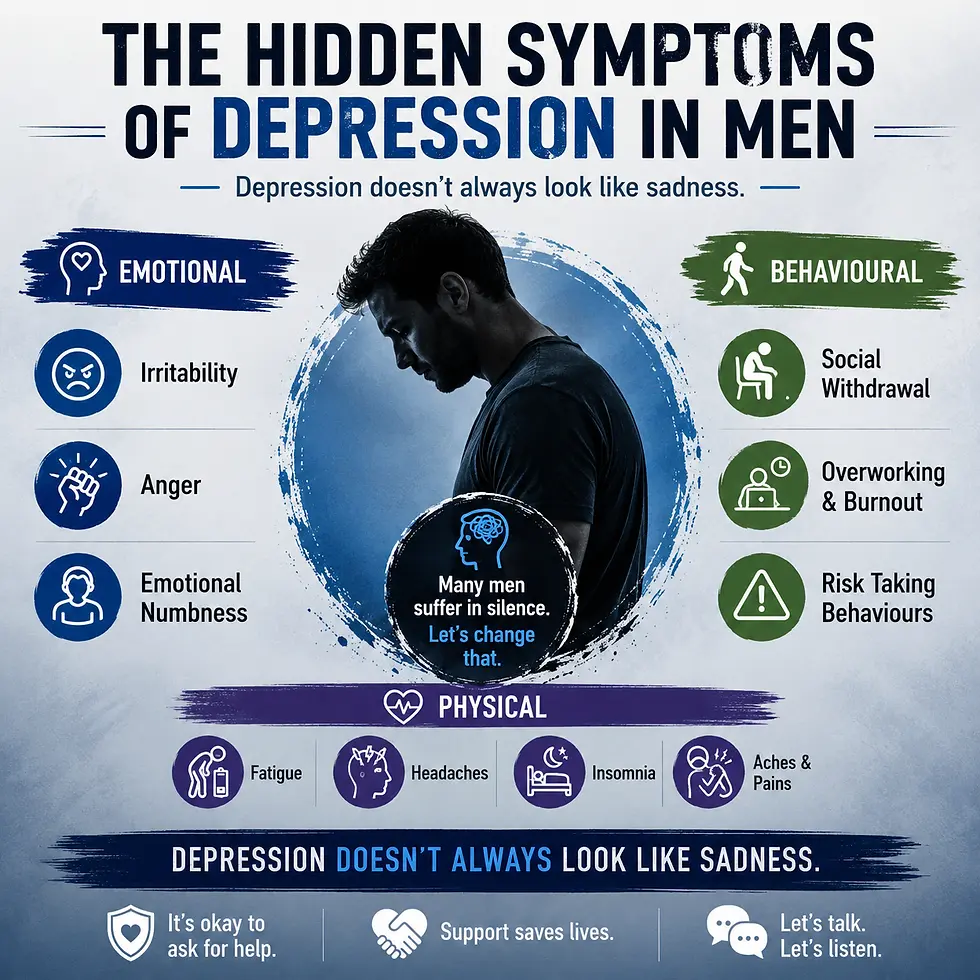
What Do the Canadian Statistics Tell Us?
Recent Canadian research paints a concerning picture:
❌64% of Canadian men report moderate-to-high stress levels.
❌Nearly 23% are at risk for moderate-to-severe depression.
❌Almost 50% are at risk of social isolation.
❌Nearly two-thirds have never accessed professional mental health services.
❌Approximately 75% of suicide deaths in Canada occur among men.
These numbers reveal that many men continue to struggle alone despite experiencing significant psychological distress.

Why Are Men Less Likely to Seek Help?
Several factors contribute to reduced help-seeking behavior:
Social Expectations
Many men grow up hearing phrases such as:
"Man up."
"Be strong."
"Don't cry."
"Handle it yourself."
These messages can unintentionally teach men that asking for help is a sign of weakness rather than a sign of self-awareness.
Fear of Judgment
Some men worry that discussing mental health concerns could affect:
Relationships
Employment
Social status
Family responsibilities
Difficulty Recognizing Symptoms
Men may not identify their symptoms as depression or anxiety because their distress often presents differently than expected.
How Mental Health Symptoms Can Present Differently in Men
Traditional nursing education often emphasizes symptoms such as:
Sadness
Tearfulness
Feelings of hopelessness
While these symptoms certainly occur in men, many present with:
Emotional Symptoms
Irritability
Anger
Frustration
Emotional numbness
Behavioral Symptoms
Increased alcohol consumption
Substance misuse
Social withdrawal
Overworking
Risk-taking behaviors
Physical Symptoms
Chronic headaches
Fatigue
Sleep disturbances
Gastrointestinal complaints
Unexplained aches and pains
Recognizing these alternative presentations can help nurses identify mental health concerns earlier.

The Hidden Impact of Social Isolation
One of the most significant findings from recent Canadian research is that approximately one in two men may be at risk of social isolation.
Social isolation can contribute to:
Depression
Anxiety
Increased stress
Poor cardiovascular health
Substance misuse
Increased suicide risk
Many men maintain large social circles through work or hobbies but may lack meaningful emotional support systems.

Why This Matters for Nursing Students
Nurses frequently encounter patients experiencing mental health challenges in:
Emergency departments
Primary care clinics
Long-term care facilities
Community health programs
Mental health services
Acute care settings
A male patient presenting with:
Chest pain
Insomnia
Chronic headaches
Elevated blood pressure
Fatigue
may also be experiencing significant emotional stress or depression.
By understanding the unique ways mental health concerns can present in men, nurses can provide more effective assessments and support.
Supporting Men's Mental Health
Healthcare professionals can help by:
Creating Safe Conversations
Use open-ended questions:
"How have you been coping lately?"
"How are things outside of work?"
"Who do you turn to when life becomes difficult?"
Normalizing Mental Health Care
Seeking support should be viewed similarly to seeking treatment for diabetes, hypertension, or an injury.
Encouraging Connection
Strong social support remains one of the most protective factors against depression and suicide.
Listening Without Judgment
Sometimes the most effective intervention is allowing a patient to speak openly without feeling criticized or dismissed.
Home Treatment and Self-Care
For individuals experiencing stress, anxiety, or emotional burnout:
Maintain regular sleep schedules.
Engage in regular physical activity.
Limit alcohol and recreational substances.
Stay connected with trusted friends and family.
Participate in hobbies and meaningful activities.
Seek professional support when symptoms persist.
Mental health challenges are common medical conditions,
not personal failures.
What can Nursing Students do?
Whether you work in acute care, community health, emergency medicine, mental health services, or long-term care, you will encounter men experiencing stress, depression, anxiety, trauma, and social isolation.
Recognizing these concerns early allows you to:
Build therapeutic relationships
Identify hidden mental health concerns
Promote early intervention
Reduce stigma
Improve patient outcomes
Potentially save lives
Mental health is health. Supporting men's mental and physical health benefits families, workplaces, communities, and healthcare systems alike.

Continuing Education: Would You Like to Know More?
Expand your understanding of mental health and wellness with these related articles:
Case Scenario
A 47-year-old male presents to a primary care clinic complaining of chronic fatigue, headaches, poor sleep, and increasing irritability over the past six months. He denies feeling depressed but reports working excessive overtime and withdrawing from friends and family.
Question
What underlying health concern should the nurse consider?
Answer
Possible depression, chronic stress, social isolation, or another mental health condition requiring further assessment.
Rationale
Men frequently present with physical and behavioral symptoms rather than openly reporting feelings of sadness or depression. Comprehensive assessment should include both physical and mental health screening.
Knowledge Check
Question 1
What percentage of Canadian suicide deaths occur among men?
A. 25%
B. 40%
C. 75%
D. 90%
Answer: C. 75%
Question 2
Which symptom may be a sign of depression in men?
A. Increased irritability
B. Social withdrawal
C. Chronic fatigue
D. All of the above
Answer: D. All of the above
Question 3
Approximately how many Canadian men report moderate-to-high stress levels?
A. 15%
B. 35%
C. 64%
D. 90%
Answer: C. 64%
Question 4
Which factor is most protective against mental health decline?
A. Isolation
B. Strong social support
C. Working longer hours
D. Avoiding emotional discussions
Answer: B. Strong social support
💡 Ready to Get Certified?
Be prepared. Be confident. Learn First Aid Today & Save a Life Tomorrow with Saving Grace Medical Academy Ltd. Now enrolling: Basic Life Support (BLS) & Standard First Aid CPR-C & AED courses designed for healthcare professionals.
📍 Training for First-Year Nursing Students
Join Saving Grace Medical Academy Ltd. for fully certified, CSA-compliant Standard First Aid CPR-C & AED courses—designed for Alberta’s future healthcare professionals.
Just Remember:
Protect Yourself. Call 911.Don’t Waste Time.

RESOURCES:

Author - Saving Grace Medical Academy Ltd
Grace. T
Medical Content Writer


