


Understanding Oppositional Defiant Disorder (ODD) and Its Overlap with ADHD
- Jason T

- Jun 7, 2024
- 6 min read
Updated: 35 minutes ago

Understanding Oppositional Defiant Disorder (ODD)
Oppositional Defiant Disorder (ODD) is a behavioral condition often identified in childhood, though it can persist into adolescence and adulthood. It is characterized by a consistent pattern of angry or irritable mood, defiant behavior, and vindictiveness, particularly toward authority figures.
For nursing students and healthcare professionals, recognizing these patterns is essential, as ODD can significantly impact a patient’s social interactions, educational outcomes, and family dynamics.
The exact causes of ODD and ADHD are complex and not fully understood. Current research suggests a combination of:
Genetic predisposition
Environmental influences
Psychosocial stressors
Symptoms of ODD
Symptoms often begin in early childhood but may present later and across the lifespan.
Angry / Irritable Mood
Frequent temper outbursts
Easily annoyed by others
Often angry or resentful
Argumentative / Defiant Behavior
Frequently argues with authority figures
Refuses to comply with rules or requests
Deliberately annoys others
Blames others for mistakes
Vindictiveness
Spiteful or vindictive behavior occurring multiple times over a 6-month period
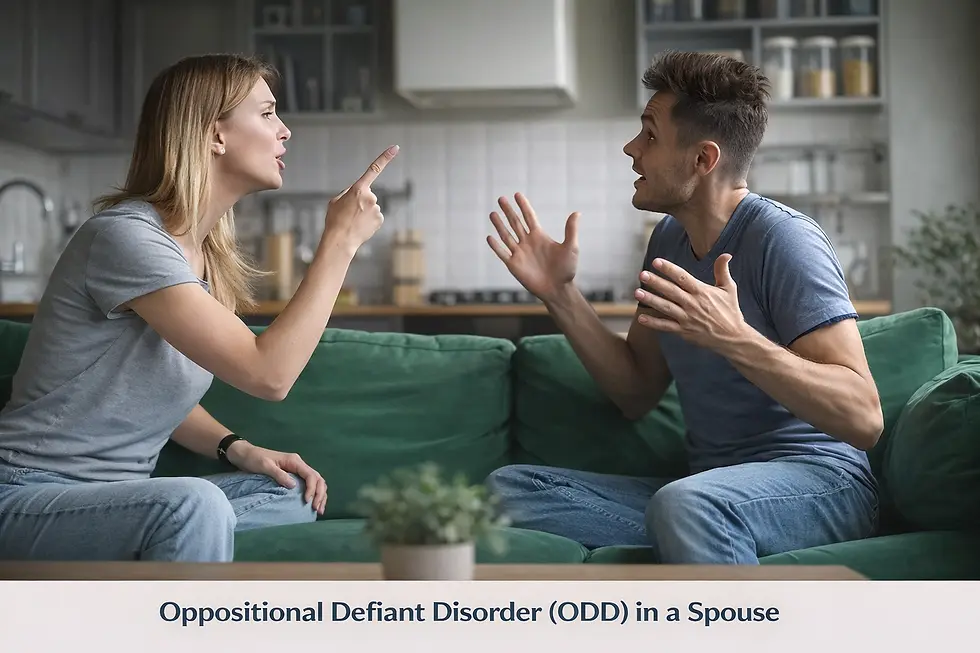
ODD in Adult Relationships (Spouse Context)
Oppositional behaviors are not limited to childhood and may present in adult relationships.
ODD in a spouse can appear as:
Emotional escalation during disagreements
Resistance to compromise or guidance
Persistent conflict and communication breakdown
These patterns can create a high-stress environment, often leading to:
Emotional exhaustion
Increased anxiety or depression in partners
Breakdown of trust and intimacy
Without intervention, these cycles may escalate. However, therapy and structured support can significantly improve outcomes.
Oppositional Defiant Disorder (ODD) in a spouse can have profound and far-reaching effects on a relationship. The hallmark symptoms of ODD—such as frequent temper outbursts, defiance against requests for help or suggestions of actions, and an inability to accept responsibility for their actions—can lead to constant conflict and strain within the marriage. The spouse with ODD may argue excessively, contradict or rebuttal spouse statements or suggestions, resist authority, and exhibit vindictive behavior, which can erode trust and communication. These behaviors create a tumultuous home environment, where arguments and tension become the norm, making it difficult for the couple to connect on a deeper emotional level.
The non-affected spouse may feel constantly criticized and undermined, leading to feelings of frustration, helplessness, and resentment.
Furthermore, the ongoing challenges associated with managing ODD behaviors can take a toll on the mental and emotional health of both partners. The spouse without ODD may experience increased stress, anxiety, and even depression due to the persistent conflict and unpredictability of their partner's actions. This can result in a breakdown of intimacy and emotional support, as both individuals become entrenched in their roles as adversaries rather than partners.
Over time, without appropriate intervention and support, these dynamics can lead to the deterioration of the relationship, potentially culminating in separation or divorce. Addressing ODD through therapy, medication, and support groups is crucial for improving relationship dynamics and fostering a healthier, more stable partnership.
Understanding ADHD and Its Symptoms
Attention-Deficit/Hyperactivity Disorder (ADHD) is a neurodevelopmental condition that often continues into adulthood. It is characterized by inattention, hyperactivity, and impulsivity.
Inattention
Difficulty maintaining focus
Appears not to listen
Incomplete tasks or instructions
Easily distracted
Hyperactivity & Impulsivity
Fidgeting or restlessness
Difficulty remaining seated
Excessive talking
Interrupting others
Difficulty waiting turns

Overlap Between ODD and ADHD
ODD and ADHD frequently occur together, making diagnosis and management more complex.
Research suggests:👉 40–60% of individuals with ADHD also exhibit ODD behaviors
Shared Characteristics
Impulsivity
ADHD: neurological impulse control challenges
ODD: behavioral defiance and reaction
Emotional Dysregulation
Difficulty managing frustration, anger, and stress
Behavioral Challenges
Disruptions at home, school, and in relationships
👉 ODD tends to be more authority-focused, while ADHD is more attention and impulse-driven

Treatment Options
Treatment for ODD often involves a combination of therapies and sometimes medications, particularly when coexisting with ADHD:
Therapy and Behavior Education
Behavioral Therapy:
Parent Management Training (PMT): Educates parents on effective discipline strategies and ways to reinforce positive behavior.
Cognitive Behavioral Therapy (CBT) or Dialectical Behavior Therapy (DBT): Helps those with ADHD / BPD / ODD recognize and change negative thought patterns and behaviors.
Social Skills Training: Teaches those effected how to interact more positively with peers, adults and spouses.
Family Therapy: Helps improve communication and relationships within the family, addressing patterns that may contribute to the child's behavior.
School-Based Interventions: Collaboration with educators to develop strategies to manage behavior and support academic success.
Medications:
Stimulants: Often used for ADHD, can help reduce symptoms of impulsivity and inattention that overlap with ODD.
Non-stimulants: Such as atomoxetine, can be helpful if stimulants are not effective or cause side effects.
Mood Stabilizers/Antipsychotics: Occasionally prescribed for severe behavioral problems.
NOTE - Speak with your family physician before taking any medication to ensure it is right for you.
Family & Environmental Support
Family therapy to improve communication
School-based behavioral plans
Consistent routines and expectations
Home Treatment and Self-Care
Supporting individuals with ODD and ADHD extends beyond clinical care.
Maintain consistent routines and expectations
Use clear, calm communication
Reinforce positive behaviors over punishment
Reduce environmental stressors where possible
Encourage structured physical activity
👉 Stability and predictability are key to reducing behavioral escalation.
Conclusion
As nursing students, understanding ODD and its overlap with ADHD is crucial in providing holistic care to affected patients. Recognizing the symptoms and implementing appropriate treatments can significantly improve the quality of life for these experiencing ADHD / ODD / BPD and their families. Early intervention and a comprehensive, multidisciplinary approach are key to managing these disorders effectively. Always work closely with healthcare providers, educators, and families to ensure the best outcomes for your patients.
🧭 Final Notes for Nursing Students
Treat ODD with empathy, structure, and consistency.
Educate families to reduce blame and guilt.
Understand that your role as a nurse might involve emotional coaching, advocacy, and therapeutic boundary-setting.
Your understanding and calm presence can be the difference between escalating conflict and restoring trust.
🔗 Further Reading and Alberta-Based Resources:
Why This Matters in Nursing Practice
As a nurse, your role extends beyond clinical interventions.
Understanding ODD and ADHD allows you to:
De-escalate conflict safely
Build trust with patients and families
Provide emotional support and advocacy
Improve patient compliance and outcomes
👉 Your calm, structured presence can directly influence patient behavior and recovery.
Mental wellness is not a luxury—it’s a foundation for quality care, and for nurses, it should be treated as essential.
Medical & Educational Disclaimer
This article is for educational purposes only and is intended for nursing students and healthcare learners. It does not replace professional medical diagnosis or treatment. Individuals experiencing symptoms should consult a qualified healthcare provider for assessment and appropriate testing.
💡 Ready to Get Certified?
Be prepared. Be confident. Learn First Aid Today & Save a Life Tomorrow with Saving Grace Medical Academy Ltd. Now enrolling: Basic Life Support (BLS) & Standard First Aid CPR-C & AED courses designed for healthcare professionals.
📍 Training for First-Year Nursing Students
Join Saving Grace Medical Academy Ltd. for fully certified, CSA-compliant Standard First Aid CPR-C & AED courses—designed for Alberta’s future healthcare professionals.
Just Remember:
Protect Yourself. Call 911.Don’t Waste Time.

RESOURCES:
Advanced Cardiovascular Life Support - Heart & Stroke Foundation
Basic Life Support BLS- CPR Course 09:00am | Saving Grace Medical
Advanced Cardiovascular Life Support Course | Saving Grace Medical
Oppositional Defiant Disorder (ODD) in Children: Care Instructions
Oppositional Defiant Disorder - Medical/Disability Information for Classroom Teachers
Oppositional Defiant Disorder Treatment in Edmonton — Edgar Psychological
Understanding Oppositional Defiant Disorder (ODD) - Calgary's Child Magazine

Author - Saving Grace Medical Academy Ltd
Jason T
Retired EMT - Heart & Stroke Foundation Senior Instructor


