


Resting Heart Rate: What Nursing Students Need to Know


Resting Heart Rate: What's your smart watch trying to tell you?
American Heart Month is a perfect time to revisit one of the most overlooked yet powerful vital signs: resting heart rate (RHR). With the rise of smartwatches and wearable health technology, heart rate data is more accessible than ever—but access does not equal understanding.
For nursing students and healthcare professionals, resting heart rate is not just a number on a screen. It is a clinical clue that can reflect cardiovascular health, physiological stress, illness, or early deterioration.
February may be known as American Heart Month, but heart health doesn’t stop at the border—making this an important Albertan conversation for nursing students and frontline healthcare providers.
This educational content was developed by experienced emergency medical instructors at Saving Grace Medical Academy for nursing and healthcare education.

Why Resting Heart Rate Matters
Resting heart rate refers to the number of heartbeats per minute when a person is at complete rest, ideally measured after waking and before physical activity.
Typical adult resting heart rate:
60–100 beats per minute (bpm) for most adults
40–60 bpm may be normal for well-conditioned athletes
From a clinical standpoint, resting heart rate reflects:
Cardiac workload
Autonomic nervous system balance
Oxygen demand vs. delivery
Overall cardiovascular efficiency
A heart that consistently beats faster at rest is working harder to meet the body’s baseline needs.
What Wearable Devices Get Right—and What They Miss
Wearable devices such as smartwatches and fitness trackers have increased public awareness of heart rate trends. This is a positive development—but it has limitations.
What wearables do well
Track trends over time
Detect baseline changes
Encourage health engagement
Provide early alerts to deviations
What wearables do not assess
Blood pressure
Cardiac output
Perfusion
Symptoms (dizziness, chest pain, dyspnea)
Medications (e.g., beta-blockers)
Acute illness or dehydration
For nursing students, this reinforces a key lesson: Heart rate must always be interpreted in clinical context.
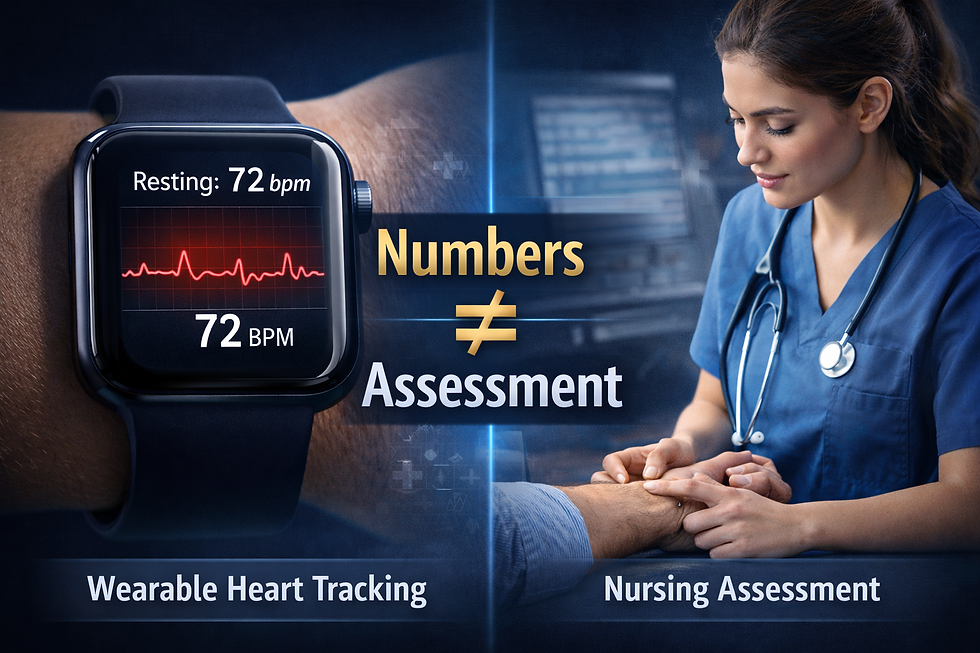
Normal vs. Concerning Resting Heart Rate Patterns
Rather than focusing on a single number, healthcare providers assess patterns and changes.
Resting Tachycardia (Elevated Heart Rate)
A resting heart rate consistently above 100 bpm may indicate:
Dehydration
Fever or infection
Anxiety or pain
Anemia
Hypoxia
Early shock
Cardiac arrhythmias
Resting Bradycardia (Low Heart Rate)
A resting heart rate below 60 bpm may be normal—or concerning—depending on the patient. Red flags include bradycardia with:
Dizziness or syncope
Hypotension
Altered mental status
Chest discomfort
Poor perfusion

Red Flags Nursing Students Should Watch For
In clinical practice and emergency response, changes in resting heart rate can signal deterioration before blood pressure drops.
Key warning signs include:
A sustained increase of 10–20 bpm above baseline
Resting tachycardia without exertion
Bradycardia accompanied by symptoms
Rising heart rate during illness or recovery
Heart rate changes that do not resolve with rest
These findings warrant further assessment—not reassurance.
Clinical Relevance to BLS and Emergency Response
In Basic Life Support (BLS) and emergency care, heart rate trends play a crucial role in early recognition.
Resting heart rate helps identify:
Compensated shock
Sepsis
Hypovolemia
Cardiac compromise
Physiological stress before collapse
A patient may maintain a normal blood pressure while their heart rate quietly signals trouble. Recognizing this early can change outcomes.
This principle aligns with cardiovascular education supported by organizations such as the American Heart Association, which emphasizes early recognition and rapid intervention.
Home Monitoring and Patient Education
Educating patients on proper heart rate monitoring improves outcomes and reduces unnecessary panic.
Best practices for home monitoring
Measure resting heart rate at the same time daily
Record trends, not isolated readings
Avoid measuring immediately after caffeine or stress
Pair numbers with symptoms
When to seek medical care
Persistent resting heart rate above 100 bpm
New or worsening symptoms
Sudden unexplained changes from baseline
Dizziness, chest pain, or shortness of breath
Wearable alerts should prompt assessment, not diagnosis.
Why This Matters During Albertan Heart Month
American Heart Month is about more than awareness—it’s about education and prevention.
For nursing students and healthcare professionals, understanding resting heart rate builds:
Stronger assessment skills
Better clinical judgment
Improved patient education
Earlier recognition of deterioration
Heart health starts with knowing what the numbers mean—and when they matter most.
Medical & Educational Disclaimer
This content is intended for educational purposes only and is not a substitute for professional medical advice, diagnosis, or treatment. Always follow institutional protocols and consult appropriate healthcare professionals when assessing or treating patients.
💡 Ready to Get Certified?
Be prepared. Be confident. Learn First Aid Today & Save a Life Tomorrow with Saving Grace Medical Academy Ltd. Now enrolling: Basic Life Support (BLS) & Standard First Aid CPR-C & AED courses designed for healthcare professionals.
📍 Training for First-Year Nursing Students
Join Saving Grace Medical Academy Ltd. for fully certified, CSA-compliant Standard First Aid CPR-C & AED courses—designed for Alberta’s future healthcare professionals.
Just Remember:
Protect Yourself. Call 911.Don’t Waste Time.

RESOURCES:

Author - Saving Grace Medical Academy Ltd
Grace. T
Medical Content Writer


