


Healthcare Recovery After Migraines, Stress, and Illness: A Guide for Medical Professionals

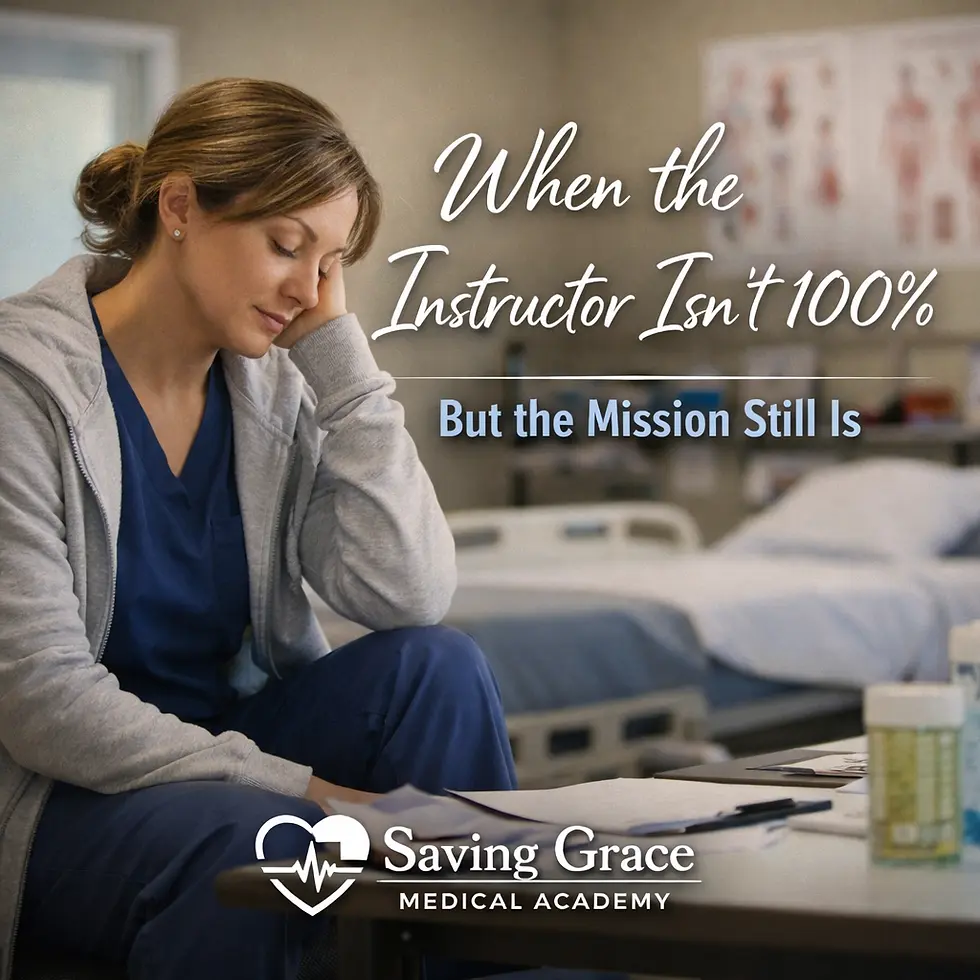
When the Instructor Isn’t 100% — But the Mission Still Is - Recovery After Migraines
Some mornings don’t start with coffee and motivation. They start with migraines, nausea, brain fog, anxiety spikes, or the aftermath of illness or injury.
In healthcare, we’re often taught to “push through.” But real-world medicine—and real-world teaching—says something different: recovery is part of care.
At Saving Grace Medical Academy, we don’t believe healthcare professionals need to be invincible. We believe they need to be trained, supported, and human.

Understanding Post-Event Brain Fog & Recovery States
Recovery After Migraines, an anxiety attack, illness, or minor injury, many people experience a post-event recovery phase. This can look similar to a postictal state and may include:
Brain fog or slowed thinking
Nausea or vomiting
Fatigue or weakness
Light or sound sensitivity
Emotional flattening or irritability
This is not laziness or lack of resilience. It is the nervous system rebalancing after stress.
Immediate Self-Care After Neurological or Physiological Stress
Hydration Comes First — Before Caffeine
Dehydration and electrolyte imbalance are common after migraines and stress responses.
Start your day with:
Water combined with medical-grade electrolytes
Focus on sodium, potassium, and magnesium
Avoid high-sugar sports drinks when nausea is present
Sodium plays a key role in blood volume and cerebral perfusion, especially after vomiting or sweating.

Gentle Nutrition Over Heavy Meals
After a neurological event, digestion may be slowed.
Best early options include:
Broth or soup
Toast or crackers
Yogurt or eggs
Simple carbohydrates paired with light protein
Salt is not the enemy during recovery—it often helps stabilize symptoms.
Managing Nausea Safely
Nausea can prolong recovery if not addressed.
Common supportive options include:
Children’s Gravol, which is often better tolerated than adult dosing
Ginger (tea, lozenges, or capsules)
Peppermint for mild nausea
Always follow dosing guidelines and consult a healthcare provider if symptoms persist.
Reduce Sensory Load During Recovery
Post-event brain fog improves faster in a low-stimulation environment.
Helpful strategies include:
Dim lighting
Reduced screen exposure
Minimal noise
Slower transitions between tasks
This is neurological first aid—not avoidance.
Monitor Before You Push Forward
Recovery should be progressive, not forced.
Seek further medical care if:
Symptoms worsen instead of improve
Confusion increases
Vomiting continues
Neurological deficits appear
Rest is not optional—it is part of treatment.
What This Means for Healthcare Professionals
In emergency care, we teach:
Scene safety
Patient assessment
Ongoing monitoring
Those same principles apply to self-care.
Being effective doesn’t mean being at 100%.It means recognizing limits, responding appropriately, and preventing further harm.
Final Thoughts: Training Includes Recovery
Some days, the most professional decision is slowing down.
When healthcare workers normalize recovery, we create:
Safer classrooms
Safer clinical environments
Stronger, more sustainable professionals
Because caring for others starts with understanding how to care for yourself.
💡 Ready to Get Certified?
Be prepared. Be confident. Learn First Aid Today & Save a Life Tomorrow with Saving Grace Medical Academy Ltd. Now enrolling: Basic Life Support (BLS) & Standard First Aid CPR-C & AED courses designed for healthcare professionals.
📍 Training for First-Year Nursing Students
Join Saving Grace Medical Academy Ltd. for fully certified, CSA-compliant Standard First Aid CPR-C & AED courses—designed for Alberta’s future healthcare professionals.
Just Remember:
Protect Yourself. Call 911.Don’t Waste Time.

RESOURCES:

Author - Saving Grace Medical Academy Ltd
Grace. T
Medical Content Writer


