


Acute Coronary Syndrome (ACS): What Every Nursing Student Must Recognize


What Is Acute Coronary Syndrome?
Acute Coronary Syndrome (ACS) is a spectrum of conditions caused by sudden reduction of blood flow to the myocardium due to coronary artery obstruction.
ACS includes:
Unstable Angina
NSTEMI (Non-ST Elevation Myocardial Infarction)
STEMI (ST Elevation Myocardial Infarction)
These conditions differ in severity — but the underlying mechanism is usually the same:
Plaque rupture → Platelet aggregation → Thrombus formation → Decreased coronary perfusion.

The Pathophysiology Nursing Students Must Understand
Most ACS events begin with:
Atherosclerotic plaque instability
Rupture of fibrous cap
Exposure of subendothelial collagen
Platelet activation
Clot formation
The degree of occlusion determines clinical presentation:
Partial occlusion → Unstable Angina or NSTEMI
Complete occlusion → STEMI
Ischemia lasting >20 minutes can lead to irreversible myocardial necrosis.
Types of Acute Coronary Syndrome
Unstable Angina
Chest pain at rest
New-onset severe angina
Increasing frequency/intensity
No troponin elevation
No myocardial cell death (yet)
This is a warning sign.
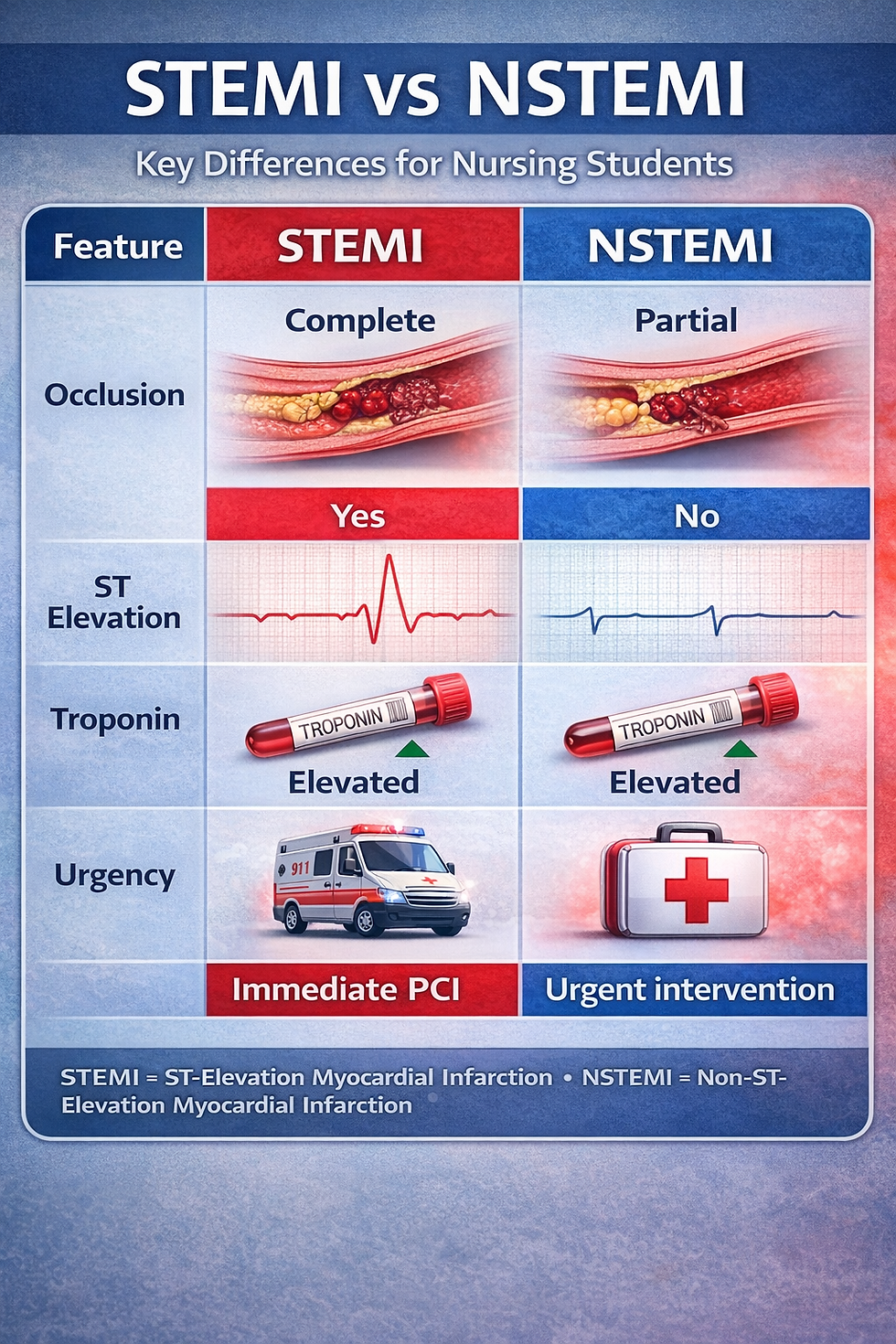
NSTEMI
Partial coronary occlusion
Elevated cardiac troponins
No ST elevation on ECG
Myocardial injury present
What is a NSTEMI?
A Non–ST Elevation Myocardial Infarction (NSTEMI) is a type of Acute Coronary Syndrome in which a coronary artery is partially blocked, reducing blood flow to the myocardium and causing cardiac muscle injury without producing ST elevation on the ECG. Unlike a STEMI, the occlusion is not complete, so the ischemia is typically subendocardial rather than full-thickness (transmural). Patients often present with chest pain or pressure, shortness of breath, diaphoresis, or atypical symptoms, and diagnosis is confirmed by elevated cardiac troponin levels indicating myocardial damage. Although it may appear less dramatic on ECG compared to STEMI, a NSTEMI is still a medical emergency requiring urgent evaluation, risk stratification, anticoagulation/antiplatelet therapy, and often early invasive intervention to prevent further infarction or complications.
These patients are unstable and require urgent evaluation.
STEMI
Complete coronary occlusion
ST elevation on ECG
Elevated troponins
Transmural infarction
What is a STEMI?
A ST–Elevation Myocardial Infarction (STEMI) is a severe form of Acute Coronary Syndrome caused by a complete blockage of a coronary artery, resulting in full-thickness (transmural) myocardial ischemia and rapid cardiac muscle death if blood flow is not restored quickly. It is identified on a 12-lead ECG by ST-segment elevation in two or more contiguous leads, reflecting ongoing injury to the heart muscle, and is typically accompanied by elevated cardiac troponin levels. Patients often present with crushing substernal chest pain, radiation to the arm or jaw, diaphoresis, nausea, or shortness of breath, although atypical presentations can occur. A STEMI is a time-critical emergency requiring immediate reperfusion therapy—preferably percutaneous coronary intervention (PCI)—because “time is myocardium,” and delayed treatment significantly increases mortality and long-term cardiac dysfunction.
This is a time-critical emergency.
“Time is myocardium.”

Classic and Atypical Symptoms
Classic Symptoms:
Crushing substernal chest pain
Radiation to left arm, jaw, or back
Diaphoresis
Nausea
Dyspnea
Atypical Symptoms (Common in Women, Elderly, Diabetics):
Fatigue
Epigastric discomfort
Shortness of breath
Lightheadedness
Nursing students must recognize atypical presentations — especially in post-op or palliative settings.
Prehospital & ACLS Connection
Frontline providers focus on:
12-lead ECG within 10 minutes
Oxygen if hypoxic
Aspirin (chewed)
Nitroglycerin (if BP stable)
Rapid transport to PCI center
This aligns with principles taught in American Heart Association ACLS guidelines.
Understanding this helps floor nurses:
Anticipate orders
Monitor for complications
Recognize deterioration early
Complications Nurses Must Monitor For
Cardiogenic shock
Arrhythmias (VT, VF, heart block)
Acute heart failure
Papillary muscle rupture
Ventricular septal rupture
Telemetry vigilance saves lives.
Post-Acute & Long-Term Care
This is where non-frontline nurses shine.
Monitor troponin trends
Educate on medication adherence
Reinforce statins, beta blockers, ACE inhibitors
Lifestyle counseling
Cardiac rehabilitation referrals
Understanding ACS improves discharge planning and palliative decision-making.
Home Treatment and Self-Care (Prevention Focus)
Patients should be educated on:
Smoking cessation
Sodium reduction
Regular physical activity
Weight management
Blood pressure control
Diabetes management
Prevention is cardiovascular nursing at its core.

Case Scenario for Nursing Students
A 62-year-old male presents with:
Chest pressure radiating to jaw
Diaphoresis
BP 148/90
HR 104
ST elevation in leads II, III, aVF
Question:
What type of ACS is most likely occurring?
Answer:
Answer is at bottom of post.
Why ACS Knowledge Elevates Nursing Practice
Whether you work in:
ER
ICU
Telemetry
Post-operative units
Palliative care
Understanding the progression from ischemia → infarction → remodeling makes you a stronger clinician.
It also builds foundational knowledge for advanced certifications like ACLS.
Medical & Educational Disclaimer
This article is intended for educational purposes only and does not replace clinical judgment, physician consultation, or institutional protocols. Always follow your organization’s guidelines and current evidence-based practice standards.
💡 Ready to Get Certified?
Be prepared. Be confident. Learn First Aid Today & Save a Life Tomorrow with Saving Grace Medical Academy Ltd. Now enrolling: Basic Life Support (BLS) & Standard First Aid CPR-C & AED courses designed for healthcare professionals.
📍 Training for First-Year Nursing Students
Join Saving Grace Medical Academy Ltd. for fully certified, CSA-compliant Standard First Aid CPR-C & AED courses—designed for Alberta’s future healthcare professionals.
Just Remember:
Protect Yourself. Call 911.Don’t Waste Time.

RESOURCES:

Author - Saving Grace Medical Academy Ltd
Grace. T
Medical Content Writer
Answer:
Inferior STEMI.
Rationale:
ST elevation in contiguous inferior leads suggests complete occlusion of the right coronary artery.
Immediate PCI is indicated.


